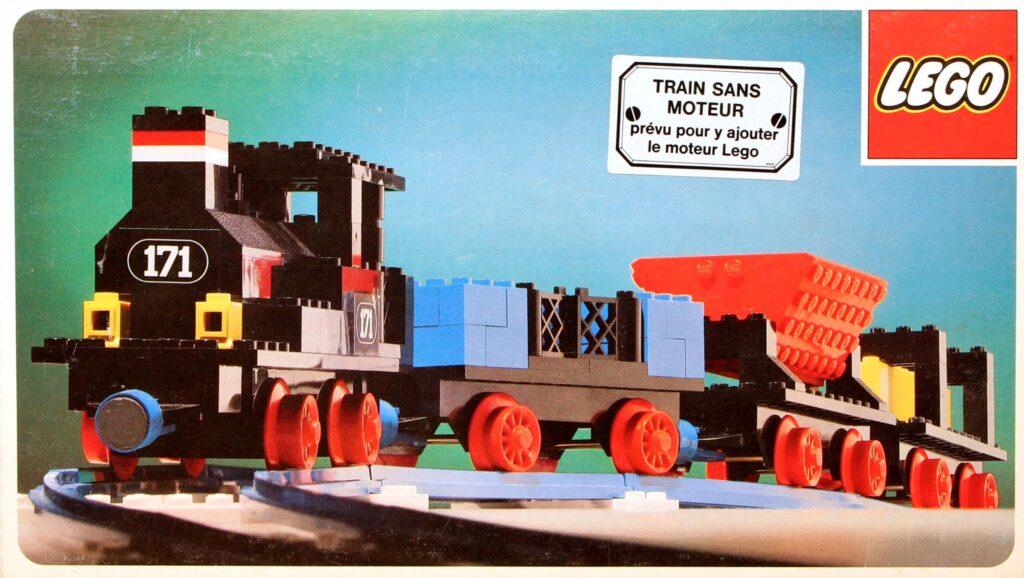
Our layout started with a single vintage train set given to me (Jonathan) by my sister as a child. This set, 171-1 Train Set Without Motor, was kept complete and during sorting of my collection it was rediscovered. This then sent me down the rabbit hole as most things brick do. I began researching the 4.5V blue rail era (1966-1979) sets and discovered such an array of brightly coloured and simple models.
I began collecting various older sets and parts to begin building. I came across an ebay advert for a large boxed collection of vintage parts, a bid was placed and the auction won. Upon arriving the parts in the box did not match what should be in the box. To my surprise I had just aquired a huge quantity of rare pieces and large quantities of various other bricks etc. After speaking to the seller it was found that a family member worked for TV production company back in the 70’s and had used it for set dressing. Unfortunately no further information could be given and I havent been able to find any more about this, other than the box that it was shipped in actually had the companies logo, warehouse and storage location numbers on it!
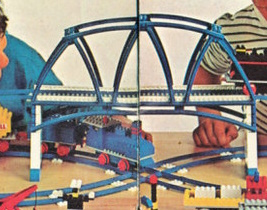
My wife then asked me what I was planning to do with yet another collection, we (I) decided that it would make an amazing display to take to around the UK to brick shows. So over the subsequent months we began collecting more sets and parts, from ebay, marketplace, brick shows and also having items donated by other members of the community. We ended up with enough to to create a fairly substantial layout of track and some buildings. I found a catalogue from 1968 that showed a steel frame inspired bridge built from track. No instructions were available as it was never sold as a set, so this took some reverse engineering. I looked through Bricklink to see what parts had been released by 1968 and that was my basis for the design. There are a number of different ideas on the internet how the bridge has been constructed, but I believe mine to be the most accurate as I only used parts that had been produced by that date. Now the track was designed and we had buildings, cars, planes, and trains we needed something to make it all look neat and tidy!
My father in-law was roped in to help build and paint some mdf boards to place everything on. They were painted in a green to closely match the official green used on the old baseplates and then roadways and a canal were painted on. The boards interlocked to attempt to keep everything flat and level.
Our first show was booked, and then everything was setup in the venue ready for the public to view. Everyone we spoke to seemed to enjoy seeing it, the overall theme for the adults was nostalgia at seeing sets they had as children, and the current children enjoyed watching the super colourful trains running around the layout! Quite a few members of the community seemed to enjoy looking at the display and quite a few even handed me bags of extra parts to continue building, so if you did thank you so much! We did have a few teething problems, the biggest being that the poor motors in the trains had taken a toll over the years, some of them being about 57 years old, and proceeded to stop working or in fact start squeaking! This would require some work..
After this show we were chatting with some friends at our local Brickish meetup who commented that they too had large quantities of vintage sets and parts and would love to come onboard and build an evening bigger layout!
So all aboard to James Gilding and Ian Kimpton!